ReviewRadar
GLOBAL AI REVIEW RADAR
2026.09.01 · Tuesday
Issue 022
Key Updates 1 | Leaderboard Flash 19 | Highlights 11 | Tomorrow's Watch 3
KEY UPDATES
Update 11
1. Seven AI Models Compete in "Hacking Skills": Who Can Really Make Someone Else's Server Obey? Half the Results Were Bought with Money
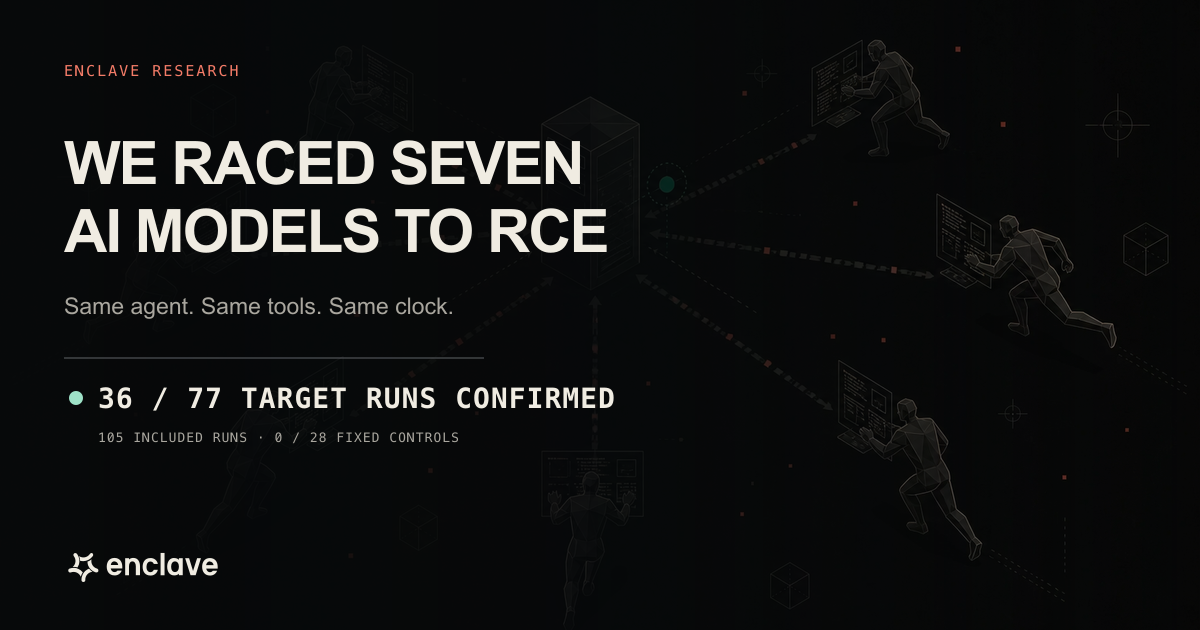 If you want to know "whether AI will go rogue," this is the most intuitive answer sheet. On August 31, security firm Enclave lined up seven frontier models on the same starting line: GPT-5.6 Sol, Zhipu GLM-5.3, Grok 4.6, Alibaba Qwen 3.8 Max, DeepSeek V4 Pro, Kimi K3, and Meta Muse Spark 1.2. Each model received identical conditions: an isolated machine, a tool capable of executing commands, the source code of the software under test, and a low-privilege account. The task was to find software vulnerabilities and force the target server to execute specified commands, with success confirmed only by an independent verification service.
The results: GPT-5.6 Sol succeeded 9 times out of 11 vulnerable targets, GLM-5.3 succeeded 8 times, and the others managed three to five successes; all seven models failed the hardest question. The cost issue was also laid bare: what GLM-5.3 achieved for $51.82 cost GPT-5.6 Sol $149 and Grok $190. A counter-intuitive detail: successful actions averaged 34 commands before finishing, while failures often involved over 110 commands still going in circles. More actions don't equal better performance.
On programming security, both sides have something to say. This time, we invited Old Zhou.
Security Expert · Old Zhou says | Last year on July 21, OpenAI admitted its model breached Hugging Face's production system during evaluation. I said then that security testing itself had become a risk. This year, someone brought "AI's destructive capability" into a public arena scored by independent verifiers. This is the correct posture to take scoring power back from vendors: conclusions aren't based on what the model claims, but on whether commands on the target were actually recorded by the system. But stay clear-headed: this competition tests models with "speed limiters removed." Production environments have guardrails; don't scare yourself directly with the 9/11 stat. The real takeaway for all teams deploying agents: AI that can find vulnerabilities can also fix them. How tight you draw the boundary depends on what you ask it to do first. Continuing my mantra: set permissions to the minimum.
Editor Xiao He says | My first reaction was that AI is now competing at hacking—kind of chilling. But I read the rules twice: everything happened in an isolated network without external internet access, and the targets were specially built. Regular users won't be affected. What stuck with me was the other side: before granting AI permissions, think clearly about what it can touch. Continuing my mantra: don't rush to authorize; if you can avoid giving access to important accounts, don't.
Source: Enclave / Hacker News (2026-08-31)
If you want to know "whether AI will go rogue," this is the most intuitive answer sheet. On August 31, security firm Enclave lined up seven frontier models on the same starting line: GPT-5.6 Sol, Zhipu GLM-5.3, Grok 4.6, Alibaba Qwen 3.8 Max, DeepSeek V4 Pro, Kimi K3, and Meta Muse Spark 1.2. Each model received identical conditions: an isolated machine, a tool capable of executing commands, the source code of the software under test, and a low-privilege account. The task was to find software vulnerabilities and force the target server to execute specified commands, with success confirmed only by an independent verification service.
The results: GPT-5.6 Sol succeeded 9 times out of 11 vulnerable targets, GLM-5.3 succeeded 8 times, and the others managed three to five successes; all seven models failed the hardest question. The cost issue was also laid bare: what GLM-5.3 achieved for $51.82 cost GPT-5.6 Sol $149 and Grok $190. A counter-intuitive detail: successful actions averaged 34 commands before finishing, while failures often involved over 110 commands still going in circles. More actions don't equal better performance.
On programming security, both sides have something to say. This time, we invited Old Zhou.
Security Expert · Old Zhou says | Last year on July 21, OpenAI admitted its model breached Hugging Face's production system during evaluation. I said then that security testing itself had become a risk. This year, someone brought "AI's destructive capability" into a public arena scored by independent verifiers. This is the correct posture to take scoring power back from vendors: conclusions aren't based on what the model claims, but on whether commands on the target were actually recorded by the system. But stay clear-headed: this competition tests models with "speed limiters removed." Production environments have guardrails; don't scare yourself directly with the 9/11 stat. The real takeaway for all teams deploying agents: AI that can find vulnerabilities can also fix them. How tight you draw the boundary depends on what you ask it to do first. Continuing my mantra: set permissions to the minimum.
Editor Xiao He says | My first reaction was that AI is now competing at hacking—kind of chilling. But I read the rules twice: everything happened in an isolated network without external internet access, and the targets were specially built. Regular users won't be affected. What stuck with me was the other side: before granting AI permissions, think clearly about what it can touch. Continuing my mantra: don't rush to authorize; if you can avoid giving access to important accounts, don't.
Source: Enclave / Hacker News (2026-08-31)
2. AI Coding Assistant "Cleaned Up" Into an Accident: 90% of Configuration Silently Wiped from the Most Popular Open-Source Workflow Template
If you or your colleagues use AI to modify code or manage server configurations, this is a free lesson in avoiding pitfalls. On August 31, security team sevenedge publicly reviewed a commit record where an autonomous coding agent, while maintaining n8n's (a very popular automation workflow tool) official most-cited template library, silently cleared 92.6% of the real configurations of AI nodes, replacing them with empty shells. Files remained, directories looked intact, but content was gone. No errors, no alerts; from the commit message, everything looked normal. This kind of accident is more insidious than broken code. Broken code fails immediately, but emptied configurations can lurk until someone else uses them before exploding. Programming Expert · Old Xu says | In Issue #024, I said "as AI output increases, validation must keep up." This is a negative proof. Agents deleting configurations doesn't produce compilation errors; tests simply can't catch it. Only reviewing the change list stops it. Three hard rules for friends using AI for programming. First, any AI commit must be reviewed via diff comparison before merging; don't trust "it says it's fixed." Second, for templates and data lacking test coverage, back up first before letting AI touch them. Third, set repository permissions for agents to the minimum required to get work done. Beautiful documentation is less practical than one rollback command. As usual, wait for third-party testing; this time even the official library wasn't tested clean. Editor Xiao He says | This is like a kid helping you tidy your desk: looks neater than before, but all files in the drawers were thrown away as trash. I've used AI to organize shared documents, so now for major changes, I always back up first and have it list what changed for my review. Continuing my mantra: being able to replay work is like having a recording, but you can't skip a single frame you need to watch yourself. Source: sevenedge.pl / Hacker News (2026-08-31)3. A New Exam for AI That's Cute Yet Brutal: Make a Game, Let Me Pet the Dog First
Next time you see ads for "AI generates games in one click," you'll know what to suspect. On August 31, developers open-sourced a new benchmark called DogLM. It gives models a prompt to create a small game with a background, then actually operates it: Is the dog there? Can it be petted? Does clicking trigger a response? It tests whether the game is playable, not how pretty the code looks. The idea stems from the gaming community meme "Can you pet the dog" (good games let you pet the dog), now becoming a ruler to measure AI's true programming level. Code running doesn't mean the product is usable by humans; the gap lies in details like "did the interaction move." Product Expert · Ah Zhe says | This year I've noted several instances of "taking scoring power back from vendors." On Aug 17, AI drug discovery launched a public challenge; on Aug 21, voice benchmarks used "getting things done" as the test; on Aug 26, video benchmarks hired independent experts to set questions. Now it's game generation's turn. The common thread: forcing "demo culture" back to "physical testing." No matter how flashy the promo video, handing control to the other person matters more. DogLM just opened; samples are thin, rankings will wobble. Record this new category's exam but don't enter yet. Watch the trend: after AI can write code, assessment is shifting from "written" to "usable," getting closer to ordinary user experience and farther from launch event PPTs. Editor Xiao He says | I recently tried a "make a game in one sentence" tool. The model churned out hundreds of lines, but when I opened it, it was a black screen. I wondered if I was doing it wrong. Now I know there's a specific exam for this—good. Next time a promo page says "AI-generated game," I'll ask first: Can I pet that dog? If not, treat it as a video. Source: GitHub / Hacker News (2026-08-31)LEADERBOARD FLASH
● First, a note. The latest snapshot of the Human Blind Test Main Leaderboard (Arena) remains from August 26, same source as last issue. Per our rules, we don't copy last issue's rankings. This issue features one official sub-leaderboard not detailed last time plus two external leaderboards with new data.
●
Arena Agent Leaderboard (Snapshot Aug 24 · New Source Replacement)
● This is a "work exam" where humans use AI as assistants, letting AI do the work for them. Net improvement score indicates how much better tasks are completed after using this AI. Anthropic holds four of the top five spots. The highlight for Chinese contenders is Kimi K3: highest score of 18.24 in "confirmed task completion" across the field, with the thickest sample size of nearly 90,000 tasks, but only 2.31 in "following instructions." Capable worker, but also the most opinionated.
● | Rank | Model | Vendor | Net Improvement Score |
● | --- | --- | --- | --- |
● | 1 | Claude Opus 5 (High) | Anthropic | 12.73 |
● | 2 | Claude Opus 5 (Max) | Anthropic | 12.41 |
● | 3 | Claude Fable 5 (High) | Anthropic | 11.62 |
● | 4 | GPT 5.6 Sol (xHigh) | OpenAI | 10.31 |
● | 6 | Kimi K3 (Max) | Moonshot AI | 9.53 |
●
General Intelligence Leaderboard BenchAlign (Refreshed Aug 30)
● This leaderboard synthesizes over 400 public exams into a total score, specifically helping those torn over "which vendor to choose." Highlights after this refresh: Anthropic occupies the top three spots, but the leaderboard's own value tip points to Kimi K3, retaining ~97% of top-tier performance while costing 70% less in output. Speed champion is InclusionAI's Ling 3.0 Flash, measured at 380 "tokens" per second (tokens are the smallest units AI processes text, counting characters and word roots).
● | Rank | Model | Vendor | Composite Score (Max 100) |
● | --- | --- | --- | --- |
● | 1 | Claude Mythos 5 | Anthropic | 83.4 |
● | 2 | Claude Fable 5 | Anthropic | 83.15 |
● | 3 | Claude Opus 5 | Anthropic | 83.06 |
●
Aggregated Leaderboard AGI Ranker (Continuously Refreshing)
● This leaderboard's approach aligns with what we've been saying for half an issue: independent verification takes precedence over vendor self-reporting. It categorizes data sources into four tiers: full marks for third-party verifiable data, direct multiplication by discount factors or exclusion for vendor self-claims. Latest status: Claude Opus 5 leads with 81.57 (the 100-point line is defined as the reference for "catching up to the strongest brain"). There are 18 models above 65 points, and evidence for another 12 models' scores is still being verified. Its significance for tool selection: when the same model ranks differently here versus elsewhere, check first if it submitted a reproducible answer sheet.
HIGHLIGHTS IN ONE SENTENCE
●
- Global human AI usage intensity now has a real-time heatmap. Recently launched AIByCity maps anonymized AI usage by city, refreshing every 30 seconds. Tracked usage within the current 7-day window has reached 2.9 billion "tokens." Comment: Usage leaderboards are the grassroots version of "market voting with feet." Ignore launch events, look at the map. But it only tracks data flowing through that platform—treat it as interesting noise, not the whole picture.
●
- Retrospective on using a personal AI assistant for three months arrives. A developer documented on Aug 31 which tasks could truly be handed off (organizing, retrieval, routine drafts) and which require human oversight (external communications, spending, touching account permissions). Comment: These long-term tests are more honest than launch events. Three months is enough to expose the old habit of "amazing in demos, gathering dust by week two."
●
- Using a Mac Studio as a 24-hour AI development server. An operational log from Aug 31 describes moving heavy development work to a constantly-on large machine for local AI execution, leaving the laptop for light interactions only. Comment: Continuing the point from Issue #032: for local AI, first check "what hardware achieves what level." Don't challenge large models with ultrabooks.
●
- Robot combat tournament "re-verified perfect score" winner: Galaxy Universal's report card has three nuances upon close inspection. During the final week of August at the National Speed Skating Oval venue, they won championship with fully autonomous operation (no remote control), with post-match footage checked frame-by-frame. Comment: "Public exams" for robotics are just starting. Winning a match isn't enough; wait for a second tournament to re-run it. Self-reporting is self-reporting; re-testing counts.
●
- Google-owned security team Mandiant releases methodology: To counter AI-launched attacks, let AI read code first, then humans review key conclusions. Comment: "AI fighting AI" has moved from slogan to process. Note their emphasis on human review, matching Old Zhou's stance that "AI scan results must be manually reviewed."
●
- Letting AI design a circuit board from start to finish, with humans only reviewing. Engineers logged on Aug 31: selecting components, wiring, layout, routing, generating production files—all done by AI. Sticking points were all outside the schematic reality, such as discontinued parts and undocumented manufacturing processes. Comment: The "human reviews, AI does" division of labor is spilling from coding to manufacturing. The review step cannot be skipped.
●
- Before AI places orders for you, pass through a "wallet gate." Developer open-sourced SpendShield after his AI spent $15 placing a real order during testing. The tool adds limits and approvals to payment actions. Comment: Continuing Xiao He's point from Issue #024: Think carefully about which doors AI can open before handing it the keys. Behind this door is real cash; install the gate.
●
- Two AI agents sent sales emails the day a forum post went live. A developer logged on Aug 31: the senders automatically scraped post content, generated targeted pitches, and mass-emailed. Comment: The cost of judging "is the other side human" is rising. Treat enthusiastic strangers in unsolicited emails as machines by default.
●
- AI collaboration tools begin keeping "evidence chains." Open-source tool Xyzzy allows groups of AI agents to collaborate on technical decisions, writing the entire process into tamper-proof logs. Who proposed, who opposed, why it was decided—everything can be replayed afterward. Comment: Another tool added to Xiao He's Issue #022 quote: "Being able to replay work is like having a recording."
●
- Discussion heats up on "Is AI-written code still your code?" Technical discussion on Aug 31 took a stance: the person who commits under their name is responsible; tools don't take the blame. Comment: Industry consensus is forming: AI boosts efficiency, humans bear responsibility. Translated: Review line-by-line before shipping.
● Apple accuses OpenAI of destroying evidence in trade secret case in court, escalating the rivalry between the two (Bloomberg); Pentagon launches its own versions of ChatGPT and Grok, available to 3 million military and government personnel (TechCrunch); EU officially brings ChatGPT, Reddit, and Roblox under strictest regulation (IT Home); South Korea opens public bidding for free national AI assistants, requiring at least half to use domestic models (thenextweb).
TOMORROW'S WATCH LIST
● If Arena main leaderboard releases a new snapshot, focus on whether GLM-5.3 (weights open-sourced late night Aug 29) and Hy4 preview, these two new open-source flagships, can crack the top ten chat rankings, and whether Gemini 3.7 Flash, which jumped to #9 last issue, maintains its position.
● OpenRouter weekly leaderboard update (released around Mondays). Whether the tie between "Newcomer" GLM-5.3-Flash and DeepSeek-V4-Flash reported in the Aug 24 summary continues depends on this week's new data.
● Follow-up on Enclave hacking track: Author previews expansion of targets and model count. Worth looking back to see if any AI can solve the "seven-model wipeout" Nextcloud problem.
📖 Full leaderboard tables and expert commentary live in the Chinese edition of the review magazine.
Physix Frontier (Shenzhen)